
The Growing Importance of Maritime Sustainability
The maritime industry is one of the most significant contributors to global trade, but it also carries substantial environmental responsibilities. Ports are complex ecosystems of infrastructure, logistics, and services that generate emissions from vessel operations, cargo handling equipment, land transport, and energy consumption. The International Maritime Organization has set ambitious targets for reducing greenhouse gas emissions from international shipping, and national regulators are increasingly introducing requirements for port emissions monitoring, air quality management, and biodiversity protection. Maritime sustainability requires a holistic approach that addresses not only carbon emissions but also water quality, waste management, noise pollution, habitat conservation, and community engagement. Ports and maritime operators that take a proactive approach to these issues gain competitive advantages through improved regulatory compliance, enhanced social licence to operate, and stronger relationships with customers, investors, and local communities.Maritime Sustainability Challenges and Opportunities
The transition toward maritime sustainability presents both significant challenges and considerable opportunities for organisations across the sector. Decarbonising port operations requires investment in electrification, renewable energy, alternative fuels, and energy-efficient equipment. Operators must balance environmental ambitions with commercial realities, ensuring that sustainability investments deliver measurable returns while maintaining operational efficiency and competitiveness. At the same time, maritime sustainability opens new pathways for innovation and value creation. Ports that achieve recognised environmental certifications such as Green Marine accreditation distinguish themselves in the marketplace and attract environmentally conscious shipping lines and tenants. Sustainability performance is increasingly factored into investment decisions, supply chain procurement, and government concession processes, making it a genuine driver of commercial advantage.How SESG Supports Maritime Sustainability
SESG has deep experience working with ports, terminal operators, shipping companies, and maritime service providers across Australia and internationally. Our team understands the unique operational, regulatory, and environmental context of the maritime industry and delivers tailored consulting solutions that drive meaningful sustainability outcomes. We support clients across the full spectrum of maritime sustainability priorities, from GHG accounting and emissions reduction planning through to environmental management systems, stakeholder engagement, and sustainability reporting. Our maritime sustainability services include gap analysis against industry frameworks, development of environmental management plans, emissions inventory and reduction strategies, Green Marine program preparation and auditing support, and ESG reporting aligned with investor and regulatory expectations. We work collaboratively with clients to embed sustainability into operational decision-making and create lasting cultural change across their organisations.Building a Sustainable Maritime Future
The maritime industry is at a critical juncture. Regulatory requirements will continue to intensify, community expectations will grow, and the physical impacts of climate change will increasingly affect coastal and port infrastructure. Organisations that invest in maritime sustainability now will be better positioned to manage risks, capture opportunities, and contribute to the broader transition toward a low-carbon economy. SESG is committed to supporting the maritime sector on this journey. Whether you are a port authority developing your first sustainability strategy, a terminal operator seeking Green Marine accreditation, or a shipping company preparing for new emissions reporting requirements, our consultants provide the expertise and practical guidance needed to achieve your maritime sustainability goals. Contact our team to discuss how we can help your organisation lead the way in sustainable maritime operations.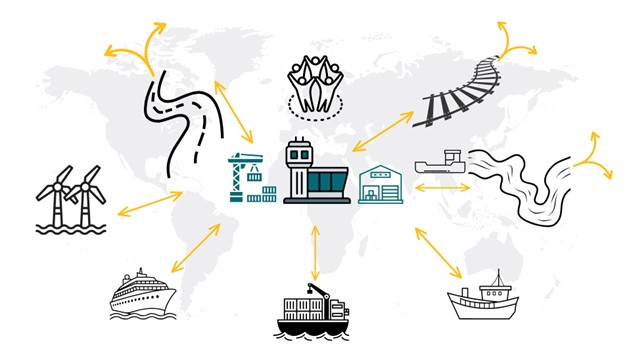
Regional Insights
Overview of the Australian Ports Sector

Australia’s ports are the backbone of the national economy, facilitating 99% of the country’s international trade by volume. Each year, more than 1.6 billion tonnes of goods move through Australian ports, representing an annual trade value of approximately $650 billion. This includes over 97 million tonnes of imports worth $255 billion, and more than 1.5 billion tonnes of exports valued at $395 billion.
Beyond their critical role in global trade, ports are major economic contributors at the state and national level. The sector adds more than $264 billion to Gross State Product annually and supports 694,000+ local jobs, equivalent to one in every 20 jobs across Australia.
As essential gateways for goods, services, and economic activity, Australia’s ports underpin supply chain resilience, national productivity, and the prosperity of communities across the country.
Source: Ports Australia, State of Trade 2024 Report
Overview of the south-east Asian Ports Sector
Southeast Asia is home to over 678 million people, making ASEAN the world’s third-largest population centre. With a USD 3.8 trillion economy in 2023, the region is now the fifth-largest economy globally, accounting for 3.6% of global GDP.
ASEAN’s ports are central to this growth. From major logistics hubs like Singapore and Port Klang to smaller coastal and fishing harbours, the region’s port network is diverse and essential to daily economic activity. In 2023, ASEAN recorded USD 3.5 trillion in international trade, with intra-ASEAN trade comprising more than 21% of the total.
Ports also support vital sectors such as fisheries, valued at around USD 76 billion, and tourism, which welcomed 127 million visitors in 2024 as the region continued its strong post-COVID recovery.
Across Southeast Asia, ports are more than trade gateways, they are critical drivers of economic growth, food security, and community resilience.
Source: ASEAN 2024, ASEAN Stats 2025
Overview of the European Ports Sector

European ports are among the world’s most advanced maritime gateways, handling over 3.8 billion tonnes of cargo each year. They support 75% of the EU’s external trade and around 30% of internal trade, making them essential to Europe’s economic competitiveness and supply-chain resilience.
With more than 450 seaports across the EU, the network ranges from global hubs like Rotterdam, Antwerp-Bruges and Hamburg to smaller regional ports vital to local industries and communities. Collectively, Europe’s ports enable millions of jobs, support key sectors including energy, manufacturing, and tourism, and are central to Europe’s green and digital transition.
European ports are not just trade gateways, they are strategic drivers of economic growth, innovation, and decarbonisation across the continent.
Source: European Sea Ports Organisation (ESPO)
Industry Specific Challenges:
Ports operate at the centre of some of the world’s most complex sustainability challenges.
Climate Risks Disrupting Global Port Operations
Globally, around 90% of major ports are exposed to climate-related hazards, while the shipping sector contributes 2–3% of global CO₂ emissions. Climate impacts are intensifying, with more frequent and severe weather events disrupting port operations, supply chains, and transport routes, while also increasing direct risks to the workforce.
Social Challenges Embedded in Maritime and Port Systems
The sector’s challenges extend well beyond the environment. Social issues remain deeply embedded in port and maritime operations, including labour rights, modern slavery exposure, seafarer wellbeing, and the impacts of port activity on surrounding communities.
The Need for ESG Alignment Across Maritime Frameworks
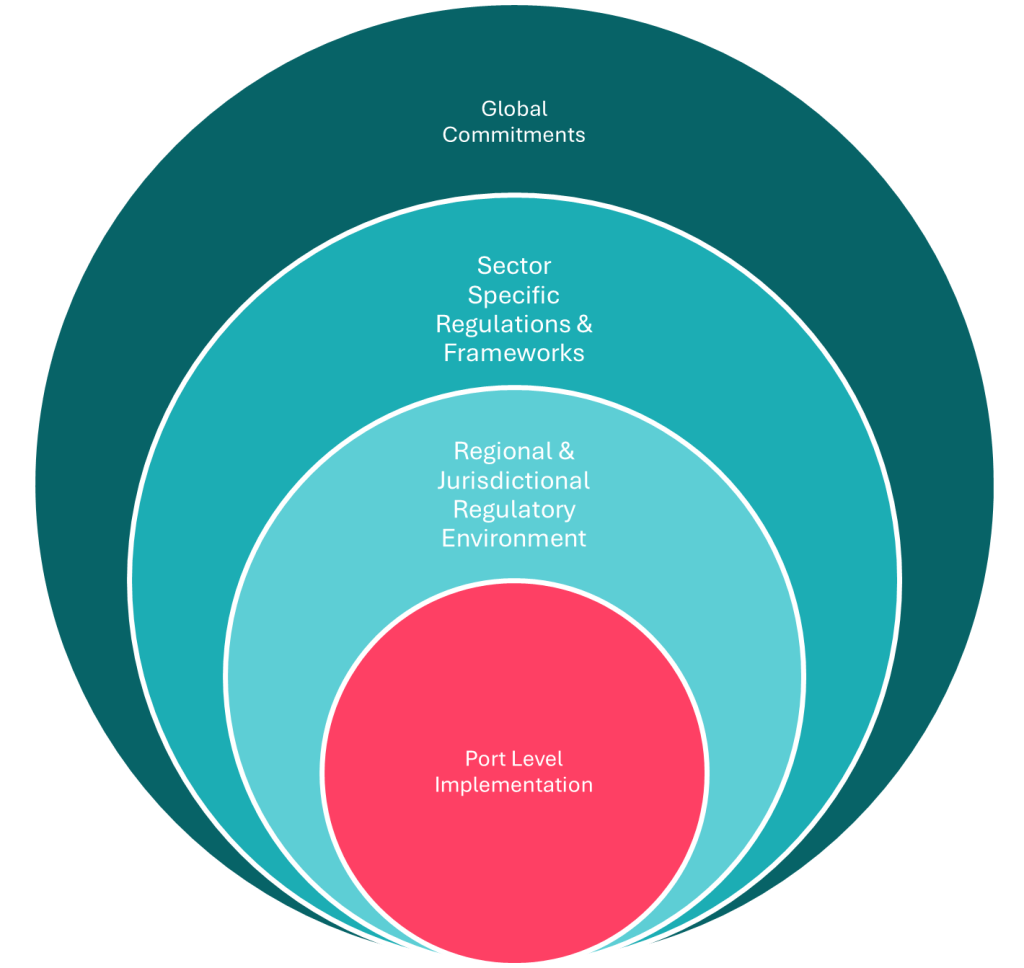
Navigating these challenges requires alignment with a growing and often overlapping set of sustainability, climate, and maritime frameworks. Ports must meet global commitments for decarbonisation and resilience while also complying with regional and national regulations, financing requirements, and industry-led standards.
This complex regulatory landscape brings several pressures:
- Multiple frameworks with different mandates and timelines
- Varied regulatory maturity across countries, increasing the risk of inconsistency
- A need for harmonised global standards to enable coordination between vessels, ports, and supply-chain partners
In this context, ports are increasingly required to balance operational demands with the transition to greener, more resilient, and socially responsible maritime systems.
Sustainability Services
Strategy Development
Why it matters for ports:
Ports and maritime operations face complex strategic issues, decarbonisation, supply-chain resilience, climate adaptation, stakeholder expectations, value-chain mapping, and regulatory shifts.
Strategy Development helps organisations translate intention into action via value-chain mapping, materiality assessments, and target-setting.
SESG’s Solutions:
- Mapping the port’s value chain
- Performing a materiality assessment addressing port-specific issues
- Setting targets aligned with global frameworks and tailoring them to the port’s strategic context.
- Designing a roadmap for transformation
Risk Management
Why it matters for ports:
Ports face a unique convergence of environmental, operational, regulatory, and social risks, from climate hazards and supply chain disruptions to workforce pressures and increasingly complex regulatory frameworks.
Effective risk analysis helps identify and prioritise sustainability and climate-related risks, strengthening organisational resilience, guiding investment in critical initiatives, and ensuring readiness for emerging mandatory reporting requirements.
SESG’s Solutions:
- Climate scenario assessment and risk analysis
- ESG risk analysis
- Modern slavery risk analysis
- Aligning risk frameworks with regulatory obligations and embedding them in governance systems.
Reporting & Disclosure
Why it matters for ports:
Ports increasingly need to respond to investor and stakeholder demands (including banks, insurers, regulators, local communities) for transparent sustainability performance, climate disclosure, and operational metrics (GHG emissions, energy, water, biodiversity, community impacts).
Effective reporting and disclosure not only strengthen compliance, but they also communicate your port’s unique sustainability journey, build trust, and demonstrate measurable progress.
SESG’s Solutions:
- Preparation of annual sustainability reports aligned with recognised global frameworks.
- Support for mandatory climate and sustainability disclosures, including emerging jurisdictional reporting requirements.
- Centralised sustainability data management and visualisation through our KubeNest platform, enabling accurate, audit-ready reporting.
Are there any sustainability related certifications specific to Ports?
There are a range of certifications and benchmarking tools that are relevant to the ports and maritime sector. A few of our favourites include Green Marine and EcoPorts. The Global Real Estate Sustainability Benchmark (GRESB) infrastructure assessment also includes sector specific analysis to enable your organisation to compare its ESG performance with other operators in your space.